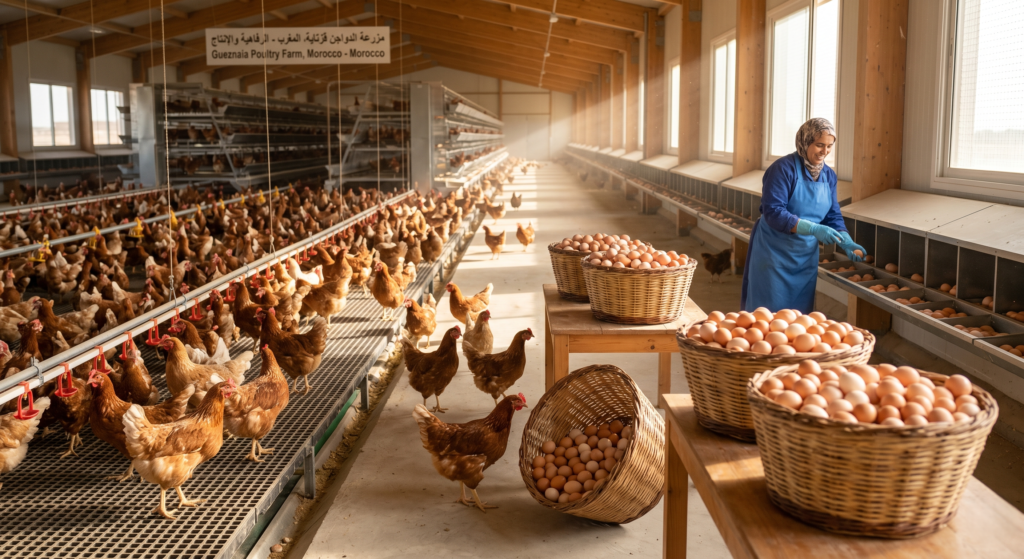
🥚 How to Increase Egg Production in Chickens: Complete Guide for Better Results
Learn how to raise Angus cattle successfully with proper feeding, housing, health care, and daily herd management techniques.
Introduction
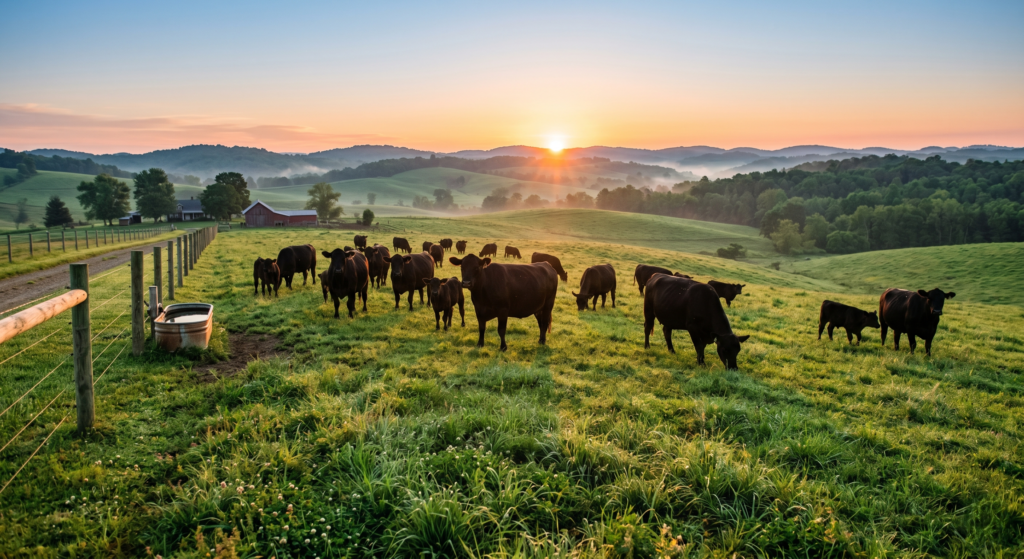
Livestock farming remains one of the most important sectors in agriculture worldwide. Among cattle breeds, Angus cattle have become one of the most popular choices for farmers because of their adaptability, strong growth performance, and excellent meat quality.
Angus cattle originated in Scotland and later became widely raised across many countries. Today, they are among the most recognized breeds in beef farming because they perform well under different environmental conditions and often produce consistent results.
Many beginner farmers choose Angus cattle because they combine manageable behavior with good productivity.
Benefits of raising Angus cattle include:
✓ Strong adaptability
✓ Good feed efficiency
✓ Fast growth potential
✓ High-quality meat production
✓ Strong market demand
✓ Suitable for various climates
However, successful cattle farming requires planning and daily management. Housing, nutrition, water supply, health care, and pasture management all influence herd performance.
Understanding Angus Cattle Characteristics
Angus cattle are known for their recognizable appearance.
Common characteristics:
🐄 Black coat color
🐄 muscular body structure
🐄 strong frame
🐄 naturally hornless appearance
Many Angus animals have calm behavior, making handling easier compared to some other breeds.
Adult cattle sizes vary according to genetics and feeding conditions.
Approximate weights:
Bull:
⚖ 800–1000+ kg
Cow:
⚖ 500–700 kg
Proper management strongly affects growth potential.
Choosing Healthy Angus Cattle
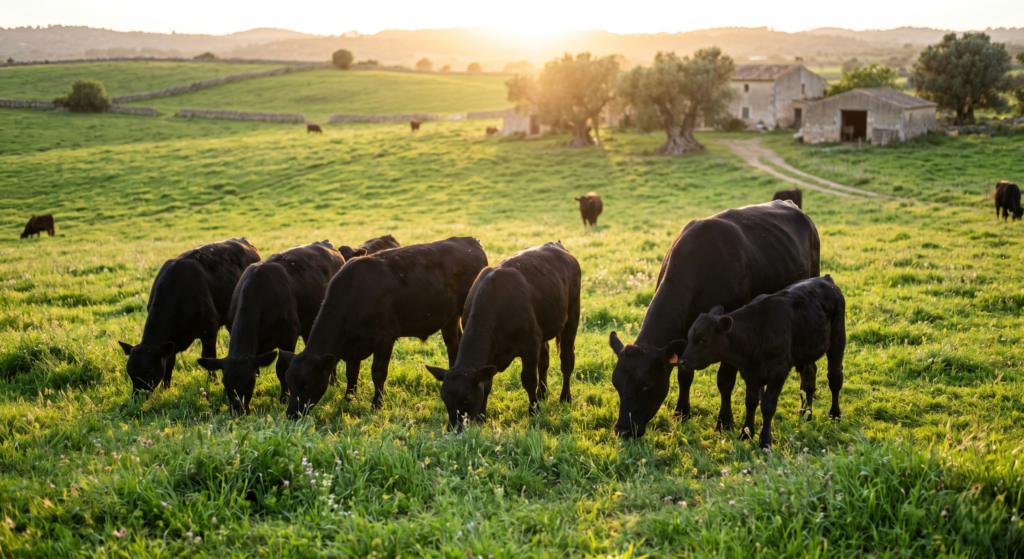
Buying quality animals is extremely important.
When selecting cattle, examine:
✓ body condition
✓ movement
✓ appetite
✓ breathing
✓ alert behavior
Healthy cattle usually show:
🐄 bright eyes
🐄 smooth movement
🐄 clean nose
🐄 active behavior
Avoid animals showing:
❌ coughing
❌ limping
❌ weakness
❌ unusual discharge
New animals should ideally be inspected by a veterinarian.
Housing Requirements
Good housing affects:
• comfort
• health
• growth
• disease prevention
Angus cattle do not necessarily require expensive buildings, but they need practical shelter systems.
A suitable cattle area should provide:
✓ shade
✓ dry ground
✓ proper airflow
✓ fresh water access
✓ protection from harsh weather
Space Requirements
Overcrowding creates stress and disease risks.
Animals require enough room for:
🐄 movement
🐄 feeding
🐄 resting
🐄 social behavior
Crowded environments may increase:
❌ aggression
❌ illness
❌ reduced growth
Pasture Management
Pasture quality plays a major role in livestock performance.
Healthy pasture provides:
🌱 natural grazing
🌱 nutrition
🌱 movement opportunities
🌱 reduced feed costs
Good pasture systems often include:
✓ rotational grazing
✓ weed control
✓ water access
✓ soil improvement
Rotational grazing helps avoid overgrazing.
Feeding Program
Nutrition is among the largest factors affecting cattle growth.
Angus cattle diets usually combine:
🌾 hay
🌽 corn
🌱 pasture grass
🧂 mineral supplements
💧 water
Balanced feeding supports:
✓ weight gain
✓ muscle development
✓ immune function
✓ reproductive health
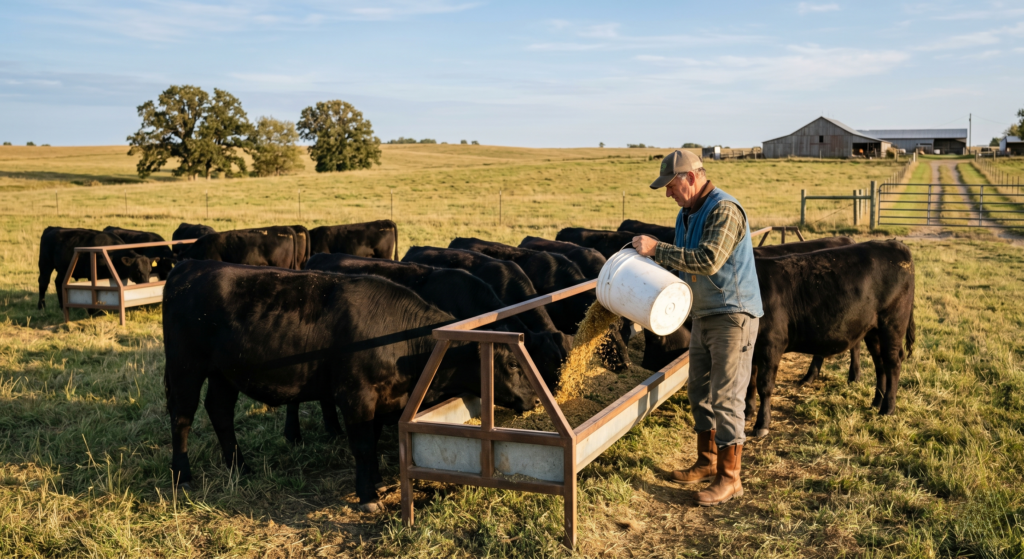
Hay Feeding
Hay becomes especially important during:
❄ winter
☀ dry seasons
🌧 poor pasture periods
Good hay quality should have:
✓ pleasant smell
✓ low mold
✓ green color
Avoid poor quality hay because it may reduce performance.
Importance of Minerals
Minerals support:
🦴 bone growth
🧬 metabolism
💪 muscle function
Common supplements:
🧂 salt blocks
🌿 mineral mixes
Always provide access according to recommendations.
Water Requirements
Water often becomes one of the most overlooked resources in livestock farming.
Large animals consume significant amounts daily.
Average requirements depend on:
🌡 temperature
⚖ body size
🌱 feed type
🐄 activity
Tips:
💧 maintain clean water
💧 inspect water systems daily
💧 avoid contaminated sources
Reduced water intake may reduce feed consumption and growth.
Vaccination Programs
Vaccination schedules vary according to region and veterinary recommendations.
Vaccines help reduce risk from:
🦠 infectious diseases
🦠 respiratory problems
🦠 livestock outbreaks
Always consult professionals regarding local programs.
Parasite Control
Parasites reduce performance and health.
Common problems include:
🪱 internal parasites
🪰 flies
🦟 insects
Control methods:
✓ routine monitoring
✓ pasture management
✓ veterinary treatment
The Latest Harvest
🐄 How to Raise Angus Cattle Successfully: Complete Beginner Guide to Healthy and Profitable Livestock Farming

🌸 Producing Lavender: Complete Guide to Growing a Distinctive High-Value Agricultural Crop