
🥚 How to Increase Egg Production in Chickens: Complete Guide for Better Results
Learn how to naturally increase egg production in chickens using proper nutrition, lighting, housing, and daily care methods.
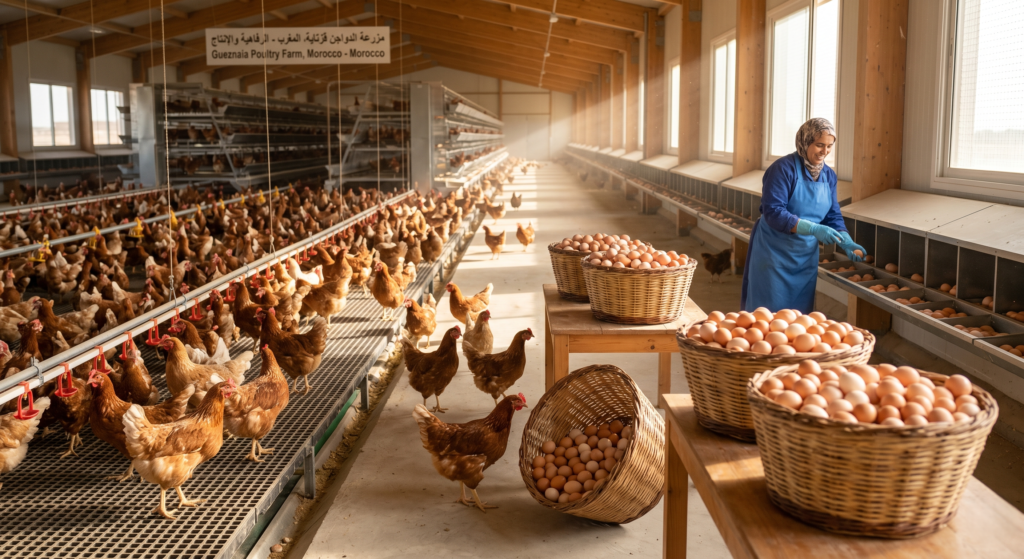
Introduction
For many poultry farmers and backyard chicken owners, egg production is one of the most important indicators of flock health and farm profitability. Healthy hens that receive proper care can produce eggs regularly and maintain production for long periods. However, many chicken owners notice sudden drops in egg production and struggle to understand why it happens.
Egg production is affected by multiple factors including breed quality, nutrition, lighting, stress levels, environmental conditions, housing design, water availability, and overall flock management.
Many beginners assume chickens naturally produce eggs continuously without much attention. In reality, laying hens require balanced nutrition and a healthy environment to maintain strong production.
A productive chicken flock provides:
🥚 Regular egg supply
💰 Increased farm income
🌱 Better farm sustainability
🍳 Fresh food at home
📈 Higher production efficiency
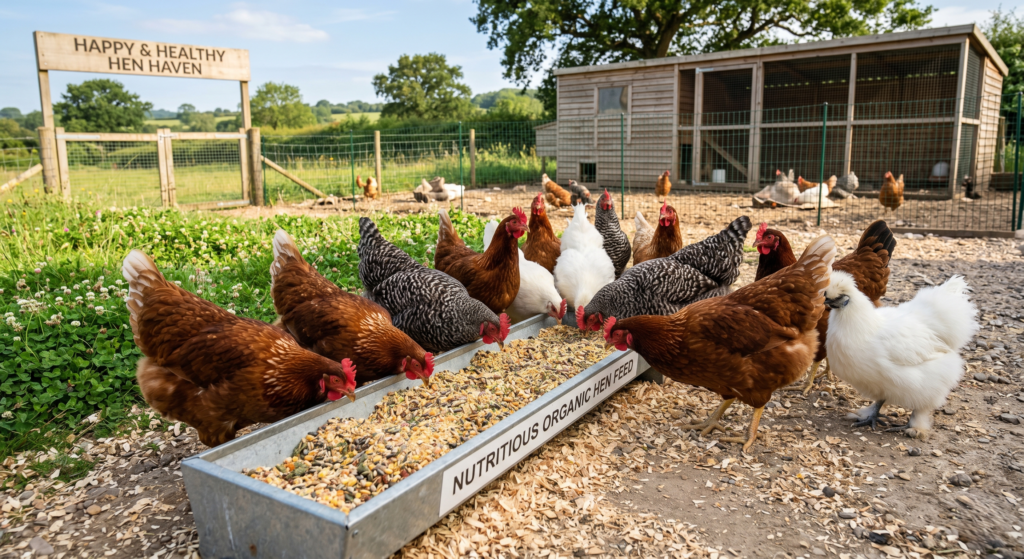
Understanding How Egg Production Works
Hens begin laying eggs once they reach maturity.
Average starting age:
⏱ 18–24 weeks
Production usually increases gradually before reaching peak levels.
Peak production commonly occurs between:
📅 6–18 months of age
After that period, production naturally decreases.
Factors affecting laying rates include:
✓ breed
✓ age
✓ nutrition
✓ water supply
✓ light exposure
✓ stress
✓ weather conditions
Best Chicken Breeds for High Egg Production
Different breeds produce different numbers of eggs.
Some breeds are known for excellent production.
🐔 Leghorn
Leghorns are among the highest egg producers.
Advantages:
✓ large egg numbers
✓ efficient feed use
✓ active birds
Expected production:
🥚 280–320 eggs yearly
Best Chicken Breeds for High Egg Production
Different breeds produce different numbers of eggs.
Some breeds are known for excellent production.
🐔 Leghorn
Leghorns are among the highest egg producers.
Advantages:
✓ large egg numbers
✓ efficient feed use
✓ active birds
Expected production:
🥚 280–320 eggs yearly
🐔 Sussex
Known for calm behavior.
Advantages:
✓ dual-purpose breed
✓ friendly nature
✓ reliable layers
🐔 Plymouth Rock
A common backyard breed.
Advantages:
✓ hardy birds
✓ easy management
✓ consistent production
Nutrition: The Biggest Factor in Egg Production
Nutrition directly affects:
• egg size
• shell quality
• laying frequency
• bird health
Poor nutrition is among the most common reasons for reduced production.
Laying hens require balanced feed containing:
🌽 carbohydrates
🌿 vitamins
🐟 protein
🦴 minerals
💧 water
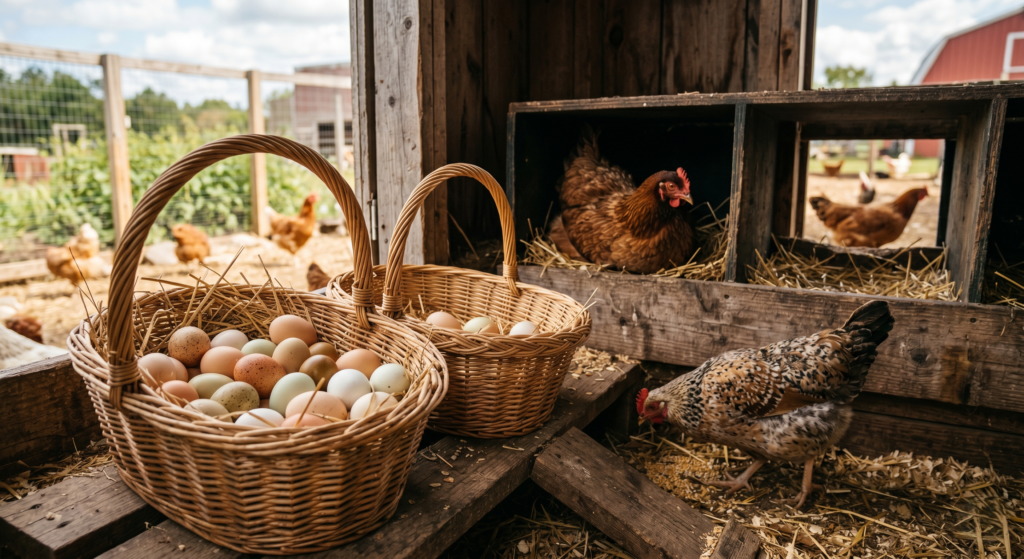
Protein Requirements
Protein helps support:
✓ feather health
✓ body maintenance
✓ egg formation
Good protein sources:
🐟 fish meal
🌱 soybean meal
🪱 insect protein
🌾 commercial layer feed
Low protein intake often causes:
❌ smaller eggs
❌ poor production
❌ weak chickens
Calcium and Eggshell Quality
Calcium is essential because eggshells require large amounts of it.
Natural calcium sources:
🥚 crushed eggshells
🦪 oyster shells
🌿 mineral supplements
Signs of calcium deficiency:
❌ soft shells
❌ thin shells
❌ broken eggs
The Latest Harvest

🐄 How to Raise Angus Cattle Successfully: Complete Beginner Guide to Healthy and Profitable Livestock Farming

🌸 Producing Lavender: Complete Guide to Growing a Distinctive High-Value Agricultural Crop